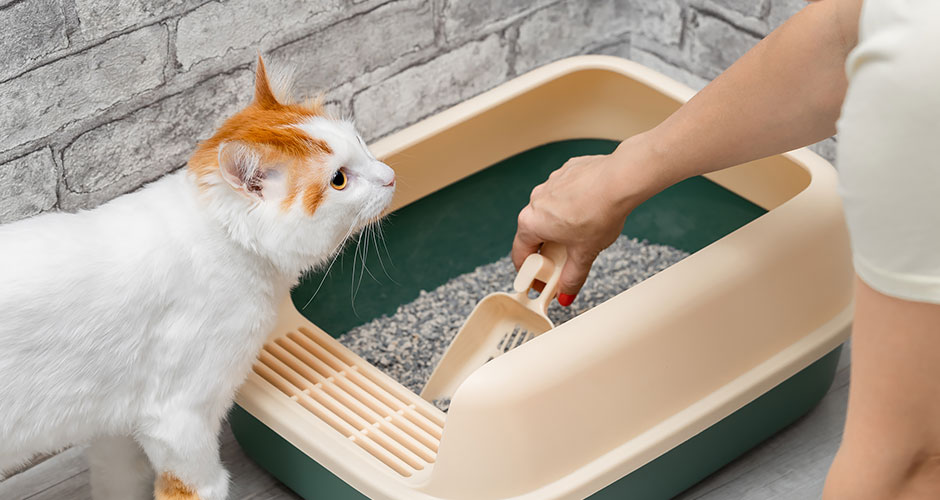
Cats are notorious for hiding signs of pain and illness. Sometimes, the only sign that something’s amiss will be hidden in the litter box.
Learn what healthy cat poop should look like, how to assess your cat’s stool quality, and signs to look for that may indicate that your cat needs veterinary care.
What Does Healthy Cat Poop Look Like?
Your cat’s poop should be medium to dark brown in color with a medium consistency. It should be easy to pick up with a scooper but not hard, dry, or crumbly. It may leave a slight residue around your cat’s hindquarters, but should not be overly messy or sticky.
Your cat’s poop may vary slightly from day to day. Changes in their diet and hydration can result in slight variations in color and consistency.
What Does The Color of My Cat’s Poop Indicate?
The normal brown color of a healthy cat’s poop comes from the breakdown of bile in their digestive tract combined with digestive enzymes and food material. Bile, a fluid produced by the liver, helps digest fats, which are then absorbed into the intestines.
Colors other than brown can indicate a serious health issue and should be assessed by your veterinarian immediately.
- Pale or whitish poop can indicate a lack of bile in the digestive tract, possibly due to a blockage in the gallbladder, liver, or small intestine. A high-calcium diet can also cause white stools.
- White specks that look like grains of rice may be tapeworm segments. The segments may be moving upon close examination. They may appear in the stool, in your cat’s fur close to their anus, and can also appear in your cat’s bedding. If you notice what may be tapeworm segments, your cat will need to be treated with a dewormer. Keep in mind, though, that many parasites are not visible, and your cat should be dewormed regularly as recommended by your veterinarian.
- Yellowish or greenish poop may indicate the presence of bile or undigested fat in the intestines. This can happen when your pet has diarrhea, possibly due to an infection or illness, and wastes move too quickly through the digestive system before they’re fully digested. Yellow poop can also be indicative of liver or pancreatic issues.
- Dark or black poop may indicate the presence of partially digested blood originating from the upper digestive tract. Dark, tarry, sticky poop should be treated as a medical emergency.
- Slimy or gel-like coating indicates mucus in your cat’s stool caused by irritation along the digestive tract. Mild, occasional bouts of mucus in stool may be due to slight gastric irritation, but large amounts or repeated episodes can indicate parasites or infection.
- Red streaks are usually fresh blood from the lower digestive tract, possibly a cut or irritation that may be visible on your cat’s anus or anal glands. Constipation and straining to defecate can be the culprit, though blood in your cat’s stool can also be due to parasites or a potentially serious viral infection like Feline panleukopenia (FPV).
When To See A Vet About Changes in Your Cat’s Poop
Slight changes in your cat’s stool color and consistency are not unusual and can indicate mild irritation from a dietary indiscretion, change in food, or stress. Occasional diarrhea, small amounts of mucus, and traces of blood can indicate mild gastric upset. Mild digestive issues can be treated at home with an over-the-counter feline gastric aid like Fast Balance GI Paste.
You can give your cat a daily digestive supplement supplement with probiotics to help manage mild digestive issues or to help keep your cat’s poop healthy. A feline digestive supplement can also help protect your cat’s immune system and help manage hairballs.
If your cat does not show any other symptoms, like lethargy, changes in appetite, or vomiting, a mild gastric issue may clear up on its own within 24-48 hours. When it comes to young kittens, senior cats, and those with chronic health issues, do not wait - seek veterinary care as soon as possible.
If your cat is experiencing straining to pee or poop, lethargy, repeated episodes of vomiting or diarrhea, or other concerning symptoms, see a veterinarian right away. Seek emergency veterinary care if your cat is ill outside of your veterinarian’s office hours.
How Your Vet Can Help Your Cat Achieve Healthy Poop
Whether your cat’s poop looks healthy or seems questionable, see your veterinarian regularly for wellness visits, making sure to bring a fresh stool sample for a fecal test, which your vet will use to check for parasites and infection.
Not sure if your cat’s poop or other digestive symptoms are normal or worth further investigation? Schedule a same-day televet appointment with VetLive to talk to a vet today.







































 Live Chat