



SAVE AN EXTRA $5 - $20 OFFUse code PETS in cart (Exclusions apply)
Save 40% with first AutoShipUse code NEW40 (Up to $40 max. Exclusions apply)

While efforts are made to answer all questions as quickly as possible, if an immediate answer is required or if your pet is in need of urgent or emergency care, contact your pet's veterinarian immediately.
You will receive an answer from Dr. Lindsay and our vet/tech team as soon as possible, usually the same day.
All answers are provided for informational or educational purposes only, and are intended to be a supplement to, and not a substitute for, the expertise and professional judgment of your pet's veterinarian.
It may be necessary to consult your pet's veterinarian regarding the applicability of any opinions or recommendations with respect to your pet's symptoms or medical condition.
Close
An error has occurred, please reload the page and try again.
Close
While efforts are made to answer all questions as quickly as possible, if an immediate answer is required or if your pet is in need of urgent or emergency care, contact your pet's veterinarian immediately.
There is no answer related to your question
Infected mosquitoes inject tiny immature worms called microfilariae into our pets. The microfilariae swim through the blood vessels and create turbulence that damages blood cells and vessel walls. As the worms mature, the damage increases causing clotting, scarring and narrowing of blood vessels. When matured, adult heartworms can measure up to 12 inches in length.
Heartworms increase the blood pressure, forcing the heart to pump harder. This increased demand can cause damage to your pet's heart. The more worms invading the blood vessels, the faster the damage occurs. Worst of all, heartworms can live inside your pet for as long as 5 years!
Pets with advanced heartworm disease may show signs of heart failure including frequent coughing, tiring easily, abdominal swelling, decreased appetite, weight loss, fainting and blood clotting problems.
Symptoms are caused because heartworms prefer to live in the heart and main pulmonary artery in the lungs. If the pulmonary artery or smaller arteries weaken, heartworms enter the air passages and can be coughed up. Sometimes a pet that's coughing up worms will appear to be vomiting, but the worms are actually coming from the lungs.
The American Heartworm Society recommends that pets remain on heartworm protection year-round because when the medication isn't given consistently, pets are left vulnerable to becoming infected. Heartworm disease has been reported in all 50 states at all times of the year. The American Heartworm Society also feels it is easier for most pet owners to remember to give a medication every single month than to give it a few months of the year.
Heartworm infections do not go directly from one pet to another. However, if a pet has a heartworm infection and is bitten by a mosquito, the mosquito can pick up the heartworm microfilariae and transmit the disease to other pets in the area.
Yes, humans can get heartworms from mosquitoes. However, heartworms don't usually circulate to the heart in humans, as they do in pets. Instead, the larvae encyst in the lungs or eyes. Fortunately, heartworm infections in humans are rare, but it's one more reason to make sure your pet doesn't harbor them.
Federal law requires a prescription for heartworm preventatives because giving this medication to pets that already have heartworm infections can cause serious illness or death. For your pet's safety, your veterinarian needs to assess heartworm status before prescribing medication.
The normal dose should not be a problem, but giving 10-20 times the normal heartworm disease prevention medication dose is dangerous for dogs with Collie genetics (Australian Shepherds, Shelties, Collies, Border Collies). The normal dose that kills the developing heartworm larvae is safe. Higher doses of these medications, such as those used in cattle and horses to kill intestinal parasites, can harm dogs with Collie breeding. Latest research shows that all drugs of the macrolide family (ivermectin, milbemycin, moxidectin, doramectin, selamectin) can cause toxicosis in Collie breeds.
If there has been a lapse in heartworm protection, you should consult with your veterinarian as soon as possible. Your vet may perform a heartworm test on your pet, or may instruct you to re-start your pet on heartworm prevention medication. Your veterinarian may want to re-test your pet 6 months later as well, since heartworm infection cannot be detected for approximately 6-7 months following initial infection.
Before starting heartworm prevention, veterinarians test to make sure the pet doesn't already have a heartworm infection. Giving heartworm disease prevention medications to pets that already have infections can cause severe illness or death.
Pets younger than 7 months old can begin heartworm prevention without testing, but the vet may recommend testing 4-7 months after starting the medication. This is because it takes up to 7 months after being infected for microfilariae to mature to the point they produce a positive test.
It takes up to 7 months for the heartworm microfilariae to mature to a stage where infection can be detected and the test is positive.
Heartworm prevention medications have been tested and confirmed safe by the FDA.
Yes. Pets can be allergic to medications for two reasons. First, they may be allergic to the medication itself, just like humans can be to penicillin. Second, they can be allergic to flavoring agents, such as beef, pork, corn, wheat, milk products, soy, brewers yeast, etc. If a pet has allergies to these, consult with your veterinarian for an alternative.
When giving your pet oral heartworm prevention medication, use something moist and tasty to get your pet's saliva flowing. For example, offer a bit of cheese, liver sausage, or hamburger.
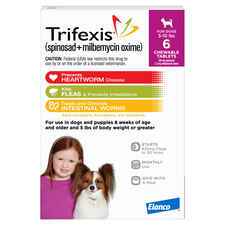
Be sure to tell your veterinarian about any medications you are already giving your pet prior to starting heartworm prevention. Recent innovative heartworm and flea prevention combination products like Trifexis may be easier to give your pet, with the added benefits of protection against multiple parasites in a single dose.
Pets can switch from one heartworm medication to another only with their veterinarian's approval, and following a negative heartworm test.
See your veterinarian who will assess your pet and determine an appropriate treatment plan.
 TOP
TOP


Mailing Address:
 Email Us
*If your pet is in need of urgent or emergency care, contact your pet's veterinarian immediately.










 Live Chat