Arthritis
Allergies
Anxiety
Ear Infections
Flea & Tick
Heart Problems
Heartworm
Hot Spots
Hyperthyroidism
Hypothyroidism
Incontinence
Shedding Control
Skin Irritation
Tear Stains
Urinary Infections
Vomiting/Diarrhea
Weight Management
Worms
See All A-Z
Arthritis
Allergies
Anxiety
Ear Infections
Flea & Tick
Heart Problems
Heartworm
Hot Spots
Hyperthyroidism
Hypothyroidism
Incontinence
Shedding Control
Skin Irritation
Tear Stains
Urinary Infections
Vomiting/Diarrhea
Weight Management
Worms
See All A-Z
Breath Fresheners
Chews & Treats
Rinses & Water Additives
Toothpaste
Ear Cleansers
Ear Infection Remedies
Ear Mite Treatments
Antibiotic Anti-Infective
Artificial Tears & Lubricants
Eye Inflammation
Glaucoma
Tear Stain Removers
Flea Prevention
Heartworm & Flea Control
Home Flea Control
Pet Flea Control
Canned Pet Food
Dry Pet Food
Raw Pet Food
Adult Pet Food
Hypoallergenic
Glucose Balance
Digestive Health & Support
Grain Free
Joint Support
Kitten Food
Puppy Food
Senior Pet Food
Skin Support
Small Breed Dog Food
Weight Loss & Management
Treats
Joint Pain
Joint Supplements
Lifting Harness
Orthopedic Beds
Steps & Ramps for Mobility
Allergy Relief
Antibiotics
Antifungal
Anxiety
Compound Medications
Cough Relief
Digestive Health & Enzymes
Diuretics
High Blood Pressure
Hormonal Endocrine
Insulin & Glucose Balance
Motion Sickness & Nausea
Seizure Disorder
Thyroid
Urinary Tract & Kidneys
Wormers
Antibacterials
First Aid
Fish Oils & Omega 3
Fly Control
Grooming Tools
Hairball Remedies
Itch Relief
Ringworm Treatments
Shampoos
Shedding Control
Skin Care Supplements
Skin Medications
Beds
Bowls & Elevated Feeders
Carriers
Car Seats & Pet Carriers
Cat Furniture
Cat Litter
Cesar Millan Training Aids
Crates & Kennels
Designer Dog Carriers
Drinking Fountains
Furniture Protectors
Gates
Grooming Tools
Invisible Dog Fences
Leashes
Outdoor Cat Pens
Pet High Chairs
Shampoos
Stain Removers
Steps & Ramps
Strollers
Toys
Training Aids
Treats
Antioxidants
Calcium
Dietary
Digestive Enzymes
Fish Oils & Omega 3
Liver Support
Multivitamins
Potassium
Senior Support
Whole Food Supplements


    100% Guaranteed
 
    Click for Rx info


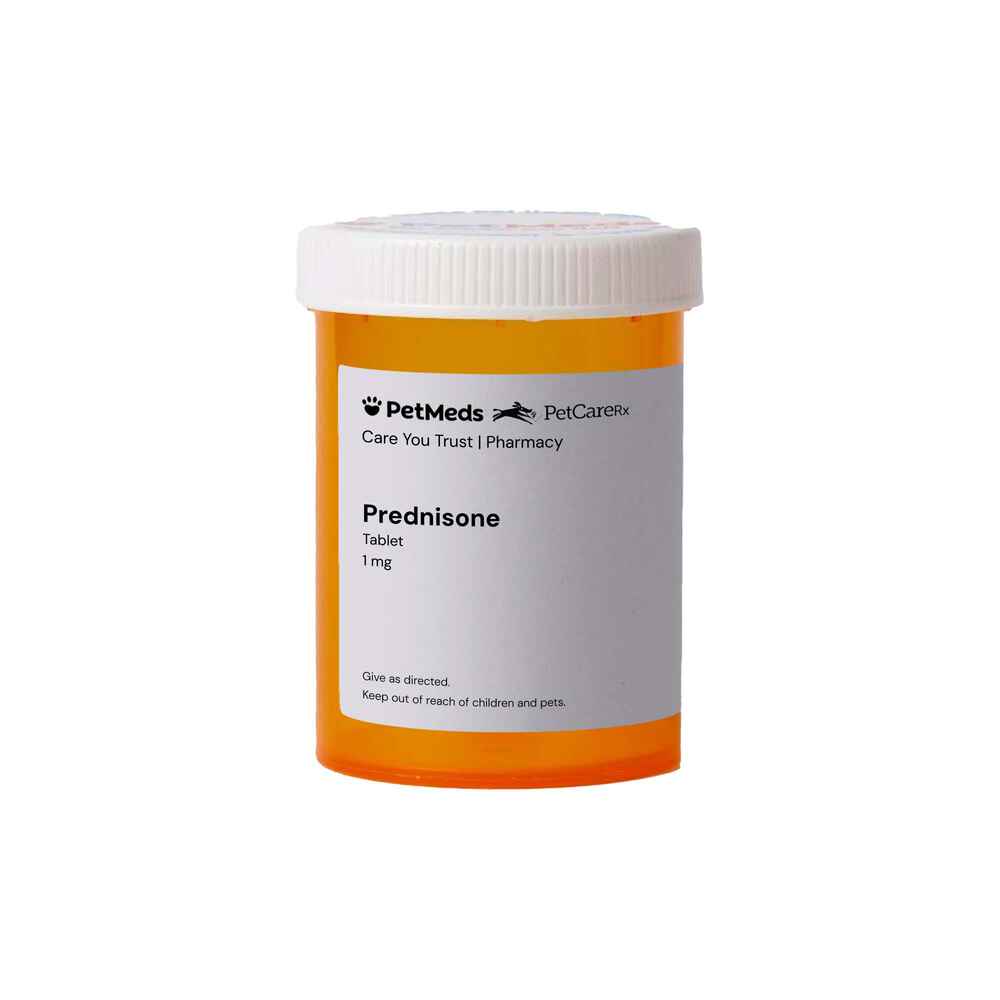
Prednisone


Q & A
 
Ships in one business day or less


  Product Info   How to use   Ingredients   Customer Reviews   Q & A  

What is Prednisone?

Prednisone is a corticosteroid used to treat various inflammatory and allergy conditions as well as other diseases. Prednisone requires a prescription from your veterinarian, and is sold per tablet.
For: Cats and Dogs
 
Benefits:
Treats a wide range of inflammatory and auto-immune conditions
Remedies swelling and itchy skin caused by allergies
Reduces redness, itching, and allergic reactions affecting the eyes

How it works:
Prednisone is a corticosteroid, which suppresses the inflammatory response to a variety of agents. Prednisone can also be used as an immunosuppressive drug for organ transplants and in cases of adrenal insufficiency (Addison's disease).

Cautions:
Without first talking to your veterinarian, don’t give your pet any over-the-counter or other prescription medications while giving prednisone. There are possible side effects, including insomnia, nausea, vomiting, upset stomach, and fatigue. Tell your veterinarian if your pet has kidney or liver disease, heart disease, stomach ulcers, hypothyroidism, diabetes mellitus, or any other medical conditions.


More Information:
 
Brand Name
Deltasone (Pharmacia), Sterapred (Merz)
Generic Name
Prednisone (pred’-ni-zone)

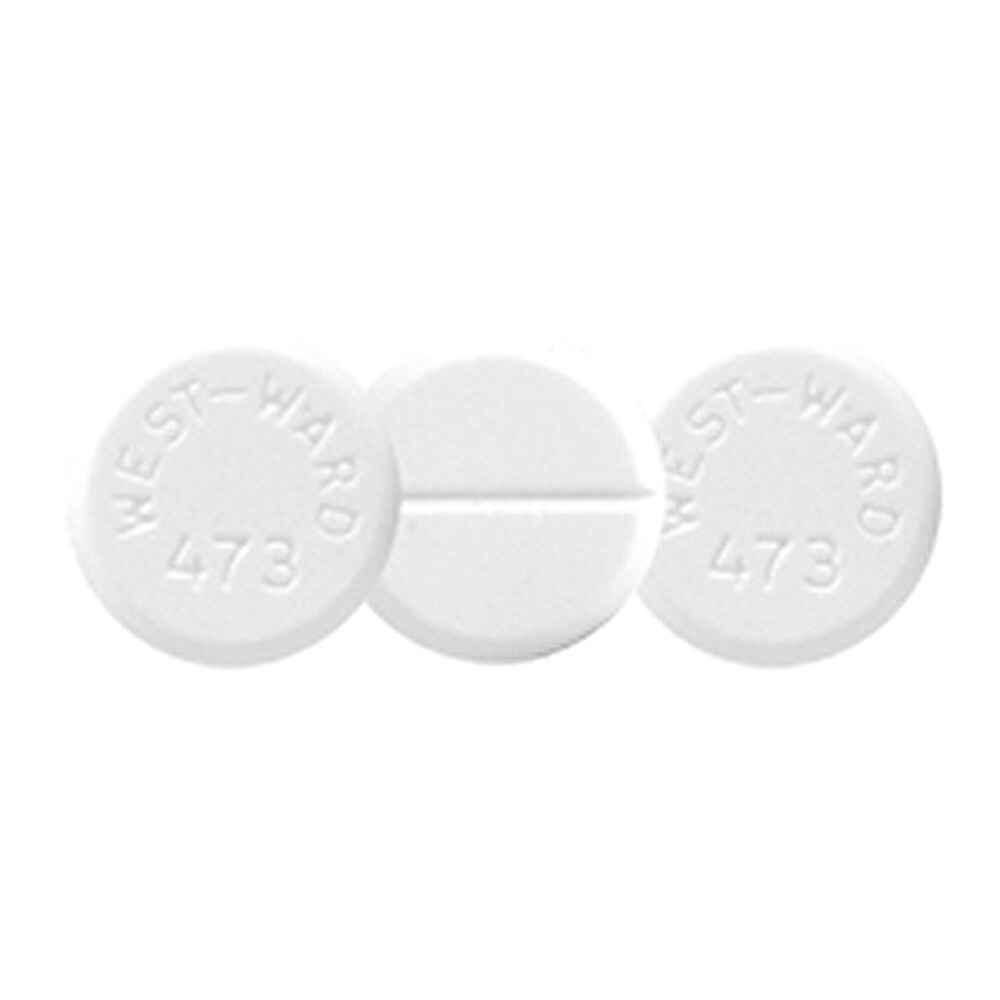
What is the most important information I should know about prednisone: Prednisone is a prescription medication that is used in dogs and cats. Prednisone is available as 1mg, 5mg, 10mg, 20mg, and 50mg scored tablets. The usual dose for dogs and cats is determined based on the condition being treated and the pet's response to treatment. Prednisone should not be stopped suddenly. There should be a gradual reduction in dosage before stopping. Prednisone should be taken with food to lessen stomach upset.

What is Prednisone: Prednisone is a corticosteroid. Prednisone reduces swelling and decreases the pet's ability to fight infections. Prednisone is used to treat many different conditions. Prednisone is used to treat endocrine disorders and arthritis. Prednisone may also be used for purposes other than those listed in this guide.

What should I discuss with my veterinarian before giving prednisone to my pet: Do not give prednisone to your pet if the pet has a serious bacterial, viral or fungal infection. Prednisone weakens the pet's immune response and its ability to fight infections. Tell your veterinarian if your pet has kidney or liver disease, heart disease, stomach ulcers, hypothyroidism, diabetes mellitus or any other medical conditions. Also tell your veterinarian if the pet is pregnant or lactating.

How should this medication be given: Give this medication exactly as directed by your veterinarian. Do not give more or less than is prescribed by the veterinarian. If you do not understand the directions ask the pharmacist or veterinarian to explain them to you. Keep plenty of water available for the pet. Prednisone should be given with food. Store prednisone at room temperature away from moisture and heat. Keep this medication away from children and pets.

What happens if I miss giving a dose: If you give one dose daily, give the missed dose as soon as remembered. However, if you don't remember until the next day, skip the missed dose and give only the regular daily dose. If you give more than one dose daily, either give the missed dose as soon as remembered, or give two doses the next dose time. If you give one dose every other day, give the missed dose as soon as remembered, then go back to the regular every other day schedule.

What happens if I overdose the pet: Seek emergency veterinary medical treatment. A single large dose of prednisone is unlikely to cause symptoms or death. An overdose is more likely to occur due to large doses being taken over a period of time. Symptoms of overdose include weight gain, panting, increased thirst, hunger and urination, vomiting, diarrhea, and Cushing's syndrome.

What should I avoid while giving Prednisone to my pet: Avoid sources of infection. Do not use any vaccines without checking with the veterinarian.

What are the possible side effects of Prednisone: If any of the following serious side effects occur, stop giving prednisone and seek emergency veterinary medical attention; an allergic reaction (difficulty breathing; swelling of the lips, tongue or face; hives), increased blood pressure or sudden weight gain. Other less serious side effects may occur. Continue giving prednisone and talk to your veterinarian if your pet experiences insomnia, nausea, vomiting or stomach upset, fatigue, muscle weakness or joint pain, problems with diabetes control or increased hunger or thirst. Other side effects that occur rarely, usually with high doses of prednisone include thinning of the skin, cataracts, glaucoma, behavior changes. Other side effects may also occur. Talk to your veterinarian about any side effect that seems unusual or bothersome to the animal.

What other drugs will affect Prednisone: Do not give any other over-the-counter or prescription medications, including herbal products, during treatment with prednisone without first talking to your veterinarian. Many other medications can interact with prednisone resulting in side effects or altered effectiveness.

Where can I get more information: Your pharmacist has additional information about Prednisone written for health professionals that you may read.


Call your veterinarian for medical advice about any side effects to your pet. You may report side effects to the FDA at 1-800-FDA-1088.
Directions:
Prednisone is a prescription corticosteroid used in dogs and cats to treat various conditions such as Addison’s disease, inflammation from arthritis, allergies, and certain autoimmune diseases.
Give prednisone exactly as directed by your veterinarian.
Tip: Prednisone should not be stopped suddenly. There should be a gradual reduction in dosage before stopping.
Dosage:
Pet Weight Dosage
Dogs/Cats:
All weights The usual dose is determined based on the condition being treated and the pet’s response to treatment. Give this medication exactly as directed by your veterinarian. Prednisone should be given with food to lessen stomach upset, and with plenty of water.
Horses:
Storage: Store this product at room temperature, away from moisture and heat.
Prednisone:
Ingredient Strength (per tablet)
Prednisone 1 mg

Prednisone:
Ingredient Strength (per tablet)
Prednisone 5 mg

Prednisone:
Ingredient Strength (per tablet)
Prednisone 10 mg

Prednisone:
Ingredient Strength (per tablet)
Prednisone 20 mg

Prednisone:
Ingredient Strength (per tablet)
Prednisone 50 mg

Prednisone 4.7 5 48 49
Prednisone There is not a more widely used as well as widely misunderstood drug used in veterinary medicine than the use of oral prednisone. Since many of the chronic diseases treated in small animal veterinary medicine are often due to an overactive immune system response, whether talking about skin/ear allergies, chronic digestive tract inflammation, chronic respiratory or coughing issues, and even inflammation of the brain and spine, this drug is often prescribed by many veterinarians for these various conditions. It is important for animal guardians to understand that when using a drug like prednisone, we are often treating symptomatically, where we dont know or understand the cause of the chronic problems of these various organ systems in most cases. . In other words we are often quickly bandaiding the symptoms but not often addressing the underlying causes of the problems that often elude even the most intense diagnostic search. . . Except for what are called autoimmune diseases, where the body literally attacks its own tissues, such as the red blood cells or platelets, leading to life threatening blood disorders, or the joints in diseases like lupus or rheumatoid arthritis, the use of prednisone can often be curative in those conditions as the immune system is so overactive that the life of the animal can be at risk. However it is important for veterinarians to always look for underlying causes of any of these various disorders, so that cure is more likely, and to avoid the occasional side effects seen when this drug is used long term. When prednisone is overused topically and/or orally, side effects can include excessive thirst/urination/appetite, and panting, as well as a thinning of the skin, and weakening of the bones and ligaments of the body, in addition to predisposing to secondary infections particularly of the urinary tract, as well as in occasional cases of diabetes. If used in high doses or for long periods, digestive tract ulceration and bleeding can also occur. However if prednisone is used in appropriate fashions for the above chronic conditions, where the oral dose is tapered to the lowest effective dose to control clinical signs, hopefully every other or every third day in those chronic incurable conditions, than many dogs can remain on this drug long term. The most important point to understand, however, is that when on this drug long term, periodic blood and urine testing should be monitored to detect any early side effects. And while I try and use other milder drugs and various supplements or antihistamines listed on the 1800petmeds website , in some very severe skin allergies with incessant itching, sometimes low dose prednisone is the only drug that can truly get the itch under control for symptomatic relief for the animals at a reasonable cost, without resorting to very expensive drugs like atopica or trips to veterinary dermatologists which can cost hundreds to even thousands of dollars long term. I certainly prefer low dose infrequent dosing of prednisone to control chronic clinical signs over the long acting cortisone injections that many vets use, which indeed have more significant side effects and risks outlined above. While taking everything above into account, and with adequate monitoring, I give prednisone an overall rating of a 5 with an ease of use of a 5 as well. 08/10/2009
This product is working great Being that the Prednisone is now the only medication that Chase has to take now since he came down with Autoimmune Disease, it is working great. He no longer has to take the Cyclosporine, and is making his red blood cells now on his own. He is a miracle dog! 05/03/2013
Works very well Guy is an 18 year old golden retriever/mutt mix with an awesome disposition and loving spirit. Unfortunately he suffered from incessant itching. First we tried all the different flea medications...topical and systemic. He still itched! The vet discovered small tumor like growths and the animal clinic charged me a lot of money to do blood work, xrays, etc($780). She recommended surgery to remove the growths (said they were histamine filled sacks) at a cost of over $1000 dollars. We did not do the surgery so the vet had us try OTC antihistamines and benadryl. Then his hair fell out in chunks (could have made a blanket with the sweeping each morning). Then tried some other prescription antihistamine that cost $80 per month....it worked but couldn't afford that. Finally tried 10 mg prednisone each morning and got great relief....no more itching or hair loss!! We understand the risks of long term use but he is a happy, old dog, lovin' life! Along with the prednisone we continue to use topical flea control medications to make sure fleas are not contributing to his itching. Again, the animal clinic (VCA) tried to charge me $2.00 for each 20 mg tablet this last visit and I got it for 29 cents a tablet from petmeds. Thank you petmeds! I only wish I didn't have to go to the vet each year to renew ($49 visit). 04/22/2013
Retreiver with IBD My dog 60 lb was diagnosed 1 year ago with IBD (inflammatory Bowel Disease) If it wasn't for prednisone I don't know what we would do !!! This is a auto immune disease that can only be controlled..never cured..when first diagnosed via endoscopy, the specialist had him taking 20 mg per day he is also on a hypoallergenic hydrolized protein diet.. we finally tapered the pred down to ZERO..but soon after he had another "episode", and back on it he went....1 year and 2 months later I think we have it controlled, he is currently down to 7.5 mg per day...There is nothing wrong with giving this medication to your animal as long as you have regular Vet check ups and blood work done twice a year and give the LOWEST dose possible for control ;) 03/04/2013
great price this site has the exact meds i wanted for 1/2 of what my vet charges so i tried to get him to approve the order....he did approve a 3 day supply and wanted me to come in for 2 more visits..i spent over $500 and the problem did get better but he didnt prescribe enough and now wants more money...customer service here is great and pricing is even better...i just wish i could have become a customer 01/30/2013
2 3 Next
118 Questions · 164 Answers

Ask & Answer.

Talk to other pet lovers about this product.


« Back


1 answer

addisons disease

my dog Penny has Addisons Disease and is on pednisone 1mg at 1/4 tab daily can you give her it every other day the vet said ok but other owners that have the same thing said no its like someone one insulin they need it daily any thoughts I want her off meds if possible or less
Th

ThT
3 weeks, 3 days ago
by
penny
Answer this question

Answers

Answer: 
Prednisone may be given every other day depending on the needs of your pet, it is always best to give the lowest possible dose that is effective.
3 weeks, 2 days ago
by
Janine M./Pharmacist
Pompano beach
Vote as Best Answer
Thanks for Voting
2 months, 2 weeks ago
by
Anonymous
nyc
Answer this question

Answers

Answer: 
No. You may find it in liquid form at your local human pharmacy or a compounding pharmacy.
2 months, 1 week ago
by
Lilli Pharmacist
Pompano Beach, FL
Vote as Best Answer
Thanks for Voting
 
1 answer

dog itching

i have changed my dogs diet to a no red food dye foods dry and wet, but he still itches constantly, and parts of his skin is still have a red tone to it, we have used oatmeal baths and strong shampoos, but my poor baby still itches. he is a part lab mix. ty for any help
3 months, 3 weeks ago
by
Anonymous
32405
Answer this question

Answers

Answer: 
It sounds like you have tried several things without getting results. You need to bring your pet to
your veterinarian so he can evaluate the situation. It sounds like he may have an allergy and may need a prescription type medication. Thanks for your question.
3 months, 3 weeks ago
by
Marty, Pharm. D.
Vote as Best Answer
Thanks for Voting
6 months ago
by
PAUL
Answer this question

Answers

Answer: 
your vet should determine this based on severity of condition ,breed and weight of dog
3 months, 3 weeks ago
by
doctordog
ohio
Vote as Best Answer
Thanks for Voting

Answer: 
There is no manufacturer dosing guideline for prednisone, it is dosed based on the condition being treated and the response to the treatment.
6 months ago
by
Janine M./Pharmacist
Pompano beach
Vote as Best Answer
Thanks for Voting
 
1 answer

cat skin infection

My cat has had a serious bacterial infection on under her skin for the last year. It has been biopsied and blood work done. We finally found an antibiotic bayatril that is clearing it up. My question is the vet also perscribed predisone for the itching I have read this should not be given to the cat when they have any type of skin bacterial infections. Please advise
6 months ago
by
Anonymous
Answer this question

Answers

Answer: 
Steroids such as prednisone are commonly prescribed for skin conditions. They do have lots of side effects, but are ok to use under the supervision of your veterinarian.
6 months ago
by
Kelly P
Vote as Best Answer
Thanks for Voting
2 3 4 5 Next

Product Q&A

118 Questions | 164 Answers
2 3 4 5 Next
This information sheet is for educational purposes only and is intended to be a supplement to, and not a substitute for, the expertise and professional judgment of your veterinarian. The information is NOT to be used for diagnosis or treatment of your pet. You should always consult your own veterinarian for specific advice concerning the treatment of your pet. The information is not intended to cover all possible uses, directions, precautions, warnings, allergic reactions, drug interactions or adverse effects, nor should it be construed to indicate that use of a particular drug is safe, appropriate or effective for your pet. It is not a substitute for a veterinary exam, and it does not replace the need for services provided by your veterinarian.
Note: Any trademarks are the property of their respective companies.
 
Facebook Twitter Pin It
 
You May Also Like
 
Denosyl 90 Mg 30 Ct For Cats & Small Dogs Up To 12lbs.

Denosyl
Denosyl 90 Mg 30 Ct For Cats & Small Dogs Up To 12lbs.

$44.99
$35.99
 
Shop Now
 
Also For Your Pet
 

Itching, Bacterial & Allergy:


Soothes & Relieves Itch:


Dry & Scaly Skin:


Eliminate Strong Odors:


Super Pure Omega 3, A Beautiful & Healthy Skin and Coat:


Help / Customer Service
My Account
PetMeds® Sites
PetMeds® Programs
Our 100% Guarantee
About Us
Contact Us
FAQs
PetMeds® Help
Privacy Policy
Printable Order Form
Site Map
Testimonials
Vet Directory
Request a Catalog

Home
Login
Email Preferences
Reorder
Easy refill
Track my order
My Account Page
My pet has passed away
PetMeds® Blog
PetHealth 101®
PetMeds® Charitable Causes
1-800-PetMeds® Careers
PetMeds® Investor Relations
pet meds
Pet Meds Photos
Pet Meds News
Pet Health Articles
Affiliate Program
Corporate Program
Shelter & Rescue Program
 
Join our Social Network
 
    PetMeds® on Facebook
    PetMeds® on Twitter
    PetMeds® on YouTube
    PetMeds® Google+
    PetMeds® LinkedIn
Copyright © 2013 PetMed Express, Inc. All Rights Reserved.
   
 
Vet-VIPPSVETERINARY-VERIFIED INTERNET PHARMACY PRACTICE SITES(CM) Online Veterinary Pharmacy Services
 
1800PetMeds.com has earned Veterinary-Verified Internet Pharmacy Practice Sites(CM) (Vet-VIPPS(CM)) accreditation through the National Association of Boards of Pharmacy® (NABP®).
Verisign Secured Click for the BBB Business Review of this Pharmacies in Pompano Beach FL