

















 Prescription Required
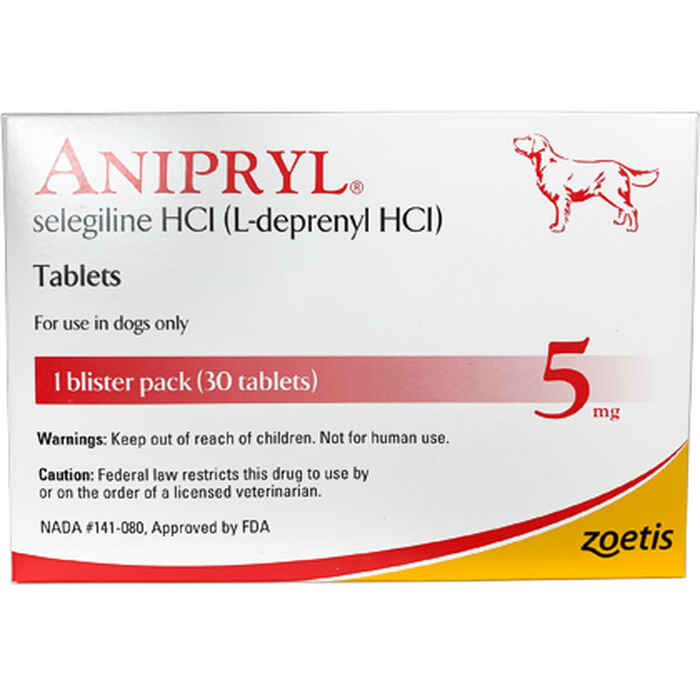
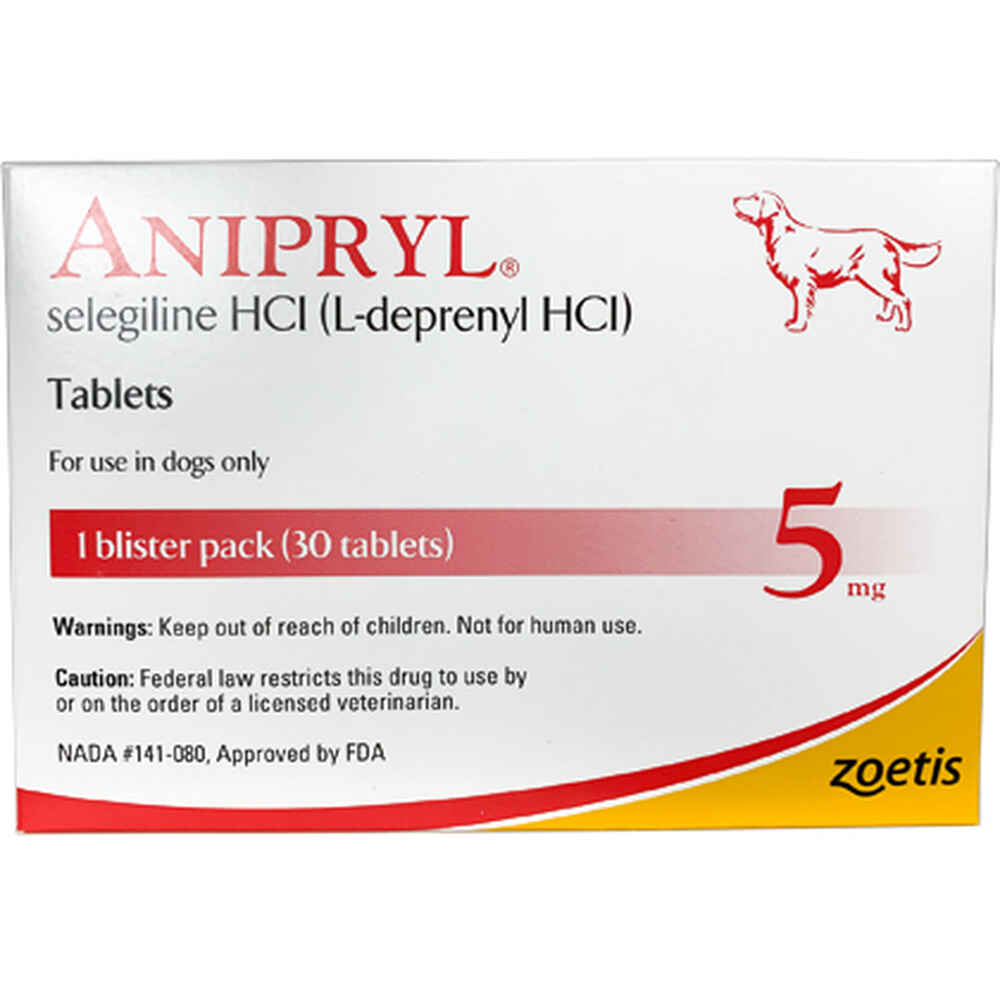
Anipryl (Selegiline)

 49 Reviews
 -5% off
-5% off
-5% off


 Prescription Required


Your order may arrive in two packages. We ship non-Rx items without delay while the Rx approval is pending. You will receive two tracking numbers.
 for
for
 $117.38
- Guaranteed savings on every order
- Pause, skip or cancel anytime
 Back
Back
Promotion Terms
20% Off Select Supplements
 Temporarily Out of Stock
 Thank you, we will notify you when this product is available.
 This item is sold per pill


Your order may arrive in two packages. We ship non-Rx items without delay while the Rx approval is pending. You will receive two tracking numbers.


What is Anipryl (Selegiline)?
Anipryl (selegiline), also known as L-Deprenyl, is a monoamine oxidase inhibitor (MAOI) that treats Cushing's Disease and Canine Cognitive Dysfunction Syndrome (senility). Anipryl requires a prescription from your veterinarian.
Suitable For:
Dogs
Benefits:
- First and only FDA-approved drug used to control clinical signs associated with Canine Cognitive Dysfunction Syndrome
- First and only product approved to control uncomplicated PDH (pituitary-dependent hyperadrenocorticism) Cushing's disease
How it Works:
Anipryl increases the concentration of a nervous system messenger chemical called dopamine. Higher levels of dopamine improve many cognitive processes. Treating Cushing's Disease has traditionally been centered on suppressing the adrenal gland's production and release of cortisone. However, this approach has a high potential for side effects. Selegiline has allowed for a new approach by suppressing the pituitary gland directly.
Cautions:
IMPORTANT SAFETY INFORMATION: Concurrent use of ANIPRYL with ephedrine, opioids, phenylpropanolamine, other MAO inhibitors (such as amitraz), and several classes of antidepressants is not recommended. Do not use in dogs with known hypersensitivity to the drug. In clinical studies, the most common adverse events were vomiting, diarrhea or changes in behavior, such as hyperactivity or restlessness.
Brand Name:
Anipryl (Zoetis), Eldepryl (Somerset)
Generic Name:
selegiline
What is the most important information I should know about Anipryl (Selegiline):
Anipryl is a prescription medication FDA approved for veterinary use in the treatment of Cushing's disease caused by a pituitary tumor in dogs. Anipryl is also used to treat canine cognitive dysfunction. The usual initial starting dose to treat Cushing's disease in dogs is 0.45 mg/pound given once a day in the morning. If no results within 2 months may increase to 0.9 mg/pound once a day. If still no response after one month of the increased dose, reevaluate the pet. The dose for canine cognitive dysfunction is 0.2-0.45 mg/pound. It may take up to one month or more to see improvement. Do not give more of this medication than is prescribed without consulting your veterinarian. Anipryl may cause drowsiness or dizziness.
What is Anipryl (Selegiline):
Anipryl, also known as L-deprenyl, is a monoamine oxidase inhibitor (MAOi) used in dogs for the treatment of Cushing's disease and canine cognitive dysfunction. It is not known specifically how Anipryl works. However, it is believed that Anipryl prevents the breakdown of dopamine. Anipryl may also be used for purposes other than those listed in this guide.
What should I discuss with my veterinarian before giving Anipryl (Selegiline) to my pet:
Anipryl should not be given if the pet is taking meperidine. Tell your veterinarian about any other medical conditions your pet has. Tell your veterinarian if your pet is pregnant or lactating.
How should this medication be given:
Give this medication exactly as directed by your veterinarian. Allow pet to drink plenty of water. If you do not understand the directions ask the pharmacist or veterinarian to explain them to you. Store Anipryl at room temperature away from moisture and heat. Keep this medication away from children and pets.
What happens if I miss giving a dose:
Give the missed dose as soon as you remember. However, if is almost time for the next regularly scheduled dose, skip the missed dose and take the next one as directed. Do not give a double dose of the medication.
What happens if I overdose the pet:
Seek emergency veterinary medical treatment. Symptoms of Anipryl overdose include excitement, irritability, nervousness, insomnia, dizziness, severe headache, hallucinations, weakness, sweating and seizures.
What should I avoid while giving Anipryl (Selegiline) to my pet:
Anipryl may cause dizziness or drowsiness. Do not give higher doses than those prescribed.
What are the possible side effects of Anipryl (Selegiline):
If any of the following serious side effects occur, stop giving Anipryl and seek emergency veterinary medical attention; an allergic reaction (difficulty breathing; swelling of the lips, tongue or face; hives), a severe headache, restlessness, agitation, or irritability, sweating, convulsions, uncontrollable or irregular movements. Other less serious side effects may occur. Continue giving Anipryl and talk to your veterinarian if your pet develops dizziness or drowsiness, nausea, abdominal pain or diarrhea, insomnia, mild confusion, agitation or anxiety, dry mouth. Other side effects may also occur. Talk to your veterinarian about any side effect that seems unusual or bothersome to the animal.
What other drugs will affect Anipryl (Selegiline):
Before giving Anipryl tell your veterinarian if your pet is also taking fluoxetine or meperidine. Talk to your veterinarian or pharmacist before giving any prescription or over the counter medicines.
Where can I get more information:
Your pharmacist has additional information about Anipryl written for health professionals that you may read.
Anipryl (Selegiline) Directions:
- Anipryl is a prescription medication used in dogs for the treatment of Cushing's disease caused by a pituitary tumor.
- Anipryl is also used in dogs to treat canine cognitive dysfunction.
Do not give more of this medication than is prescribed without consulting your veterinarian. Anipryl may cause drowsiness or dizziness.
Anipryl (Selegiline) Dosage:
| Weight | Dosage |
|---|---|
| All weights | The dose for canine cognitive dysfunction is 0.2mg-0.45mg per pound of body weight. It may take up to one month or more to see improvement |
| Weight | Dosage |
|---|---|
| All weights | The usual starting dose to treat Cushing's disease is 0.45mg per pound of pet's body weight given once a day in the morning. If no result within two months, may increase to 0.9mg per pound of pet's body weight. If still no response after one month of the increased dose, reevaluate the pet |
| Cats | Do not use! |
|---|
| Horses | Do not use! |
|---|
Storage:
Should be stored at room temperature, away from moisture and heat.
Anipryl (Selegiline) Ingredients:
| Active Ingredient | Amount |
|---|---|
| Selegiline Hydrochloride | 5 mg |
| Active Ingredient | Amount |
|---|---|
| Selegiline Hydrochloride | 10 mg |
| Active Ingredient | Amount |
|---|---|
| Selegiline Hydrochloride | 15 mg |
| Active Ingredient | Amount |
|---|---|
| Selegiline Hydrochloride | 30 mg |
 Swipe
Swipe


Get a prescription with a 10-minute vet call
Join Dutch and talk to a licensed vet online whenever you need for just $49/mo.

Same-day, night & weekend appointments

Membership covers up to 5 pets (dogs & cats)

Top-rated licensed veterinarians

Cancel Dutch anytime

You already have a Dutch membership in cart.

Great news! Dutch can prescribe there.
Sorry, Dutch can’t currently prescribe medications due to state law.
Autoship Selection
 null
null
Save on shipping by adding to your upcoming order.




 Live Chat


