



SAVE AN EXTRA $5 - $20 OFFUse code PETS in cart (Exclusions apply)
Save 40% with first AutoShipUse code NEW40 (Up to $40 max. Exclusions apply)

While efforts are made to answer all questions as quickly as possible, if an immediate answer is required or if your pet is in need of urgent or emergency care, contact your pet's veterinarian immediately.
You will receive an answer from Dr. Lindsay and our vet/tech team as soon as possible, usually the same day.
All answers are provided for informational or educational purposes only, and are intended to be a supplement to, and not a substitute for, the expertise and professional judgment of your pet's veterinarian.
It may be necessary to consult your pet's veterinarian regarding the applicability of any opinions or recommendations with respect to your pet's symptoms or medical condition.
Close
An error has occurred, please reload the page and try again.
Close
While efforts are made to answer all questions as quickly as possible, if an immediate answer is required or if your pet is in need of urgent or emergency care, contact your pet's veterinarian immediately.
There is no answer related to your question
How to feed a sick pet
If you don't know what is wrong with your pet, but you know he or she isn't feeling well, visit your veterinarian for advice. In the meantime, here are some principles for feeding that gently stimulate digestion in a sick pet:
Below are some common health conditions in dogs and cats that require dietary adjustments. Nutritional changes should be made depending on your pet's specific health problem.
Key facts about feeding a sick pet
Obesity in dogs and cats
Obesity is the single most common pet nutrition problem. Unfortunately, obesity predisposes pets to develop arthritis, diabetes, pancreatitis, and skin problems.
Some dogs are predisposed to becoming obese because they have genes associated with obesity: Labrador Retrievers, Cocker Spaniels, Cairn Terriers, West Highland White Terriers, and Scottish Terriers. Cats may also have breed dispositions to obesity; however, at this time, there are no definitive lists for specific breeds affected.
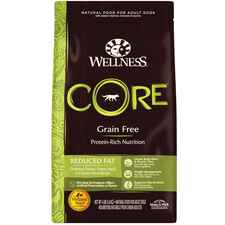
Visit our Weight Loss section to view tips on helping your pet lose weight. We recommend low calorie treats including Greenies Lite Dental Chews (for dogs) or Feline Greenies Smart Bites. If your veterinarian puts your pet on a diet, we recommend Wellness CORE Reduced Fat Dry Dog Food or Purina Pro Plan Adult Weight Management Chicken & Rice Formula Dry Cat Food.
Food allergies in dogs and cats
Many pets have a food allergy. Dogs and cats become allergic to foods if their immune systems mistakenly recognize the food as harmful, causing them to overreact to it. Overreaction can manifest as nausea, vomiting, diarrhea, or malaise. With dog food allergies, you will often get pruritus (itching) and inflammation of the legs and ears, progressing to chronic skin and ear infections. With cat food allergies, you will often get pruritus of the head and neck. These cats scratch themselves and develop eye infections when their nails accidentally scratch their eyeballs as they rub their heads.
Almost always, food allergies are caused by proteins, and these allergenic proteins are not destroyed by freezing, cooking, or digestion. Proteins from meat, corn, wheat, soy, potatoes, beets, and yeast commonly cause problems. In addition, a dog allergy or a cat allergy can come from chemicals, dyes, preservatives, and even to fruits and vegetables, including tomatoes.
The tendency to be allergic is often inherited and scientists believe that these pets have a genetic defect in the gut-associated lymphoid tissue (GALT). The GALT is the part of the immune system that controls materials that enter the body through the intestines.
One way to limit your pet's allergic symptoms is to feed a limited ingredient diet—only 1-2 proteins and 1-2 carbohydrates at a time. Other pets benefit from hydrolyzed commercial diets that have proteins broken into such small pieces that they no longer trigger GALT cells to react. Hydrolyzed commercial diets are prescription foods available through your veterinarian. Another way to help allergic pets is to feed only high-quality, human-grade foods with no fillers. Many pets allergic to corn in cheaper pet food tolerate it easily in a high-quality organic pet food.
We recommend that all pets with allergies receive Omega 3 fatty acid supplements because these fatty acids decrease inflammation throughout the body. Excellent sources of Omega 3 fatty acids are Be Well for Dogs, and Nordic Naturals Omega-3 Pet for dogs.
Feeding diabetic pets
Dogs and cats develop diabetes just as people do. Diabetes is a deficiency of insulin or a resistance to insulin so that sugars in the blood no longer enter the cells where they can provide energy. Instead, sugar remains within the blood stream, and laboratory tests show blood or urine glucose values that are consistently higher than normal.
Female dogs are more inclined to become diabetic than male dogs; and dogs of some breeds are at a higher risk: Miniature Pinscher, Miniature Poodle, Dachshund, Keeshond, Puli, and Cairn Terrier. With cats, a breed predisposition to diabetes has not been found.
Pets with diabetes need to be fed the same amount of food at the same time every day. Foods with complex carbohydrates are digested most slowly (vegetables such as sweet potatoes and carrots), and are more desirable than foods with simple carbohydrates (rice flour, wheat flour). Diabetic pets should avoid moist packaged foods that are high in sugar.
Some diabetic pets benefit from diets that are high in protein and low in carbohydrates, similar to the Atkins Diet for humans. Many diabetic pets also benefit from diets high in dietary fiber. Fiber prevents blood glucose levels from surging shortly after eating, and fiber also helps pets produce short-chain fatty acids that are used by the liver to control blood sugar levels. If your diabetic pet has hyperlipidemia (high blood lipids or fats), he or she will benefit from a diet with fats below 10-12% of their total diet.
Two commonly recommended products for treating diabetes in pets are ProZinc Cat Insulin for cats and Vetsulin Insulin for dogs. Ask your veterinarian what is best for your pet.
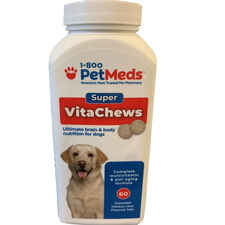
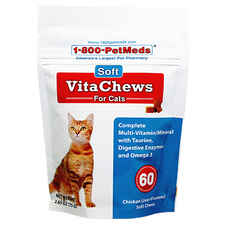
We recommend that all pets with diabetes receive antioxidants and Omega 3 fatty acids, such as those in Super VitaChews for Dogs and Soft VitaChews for Cats. If your pet prefers a powdered supplement, we recommend Be Well for Dogs which contains antioxidants.
Feeding pets with dilated cardiomyopathy
Dilated (swollen) cardiomyopathy (heart muscle disease) is a condition where the heart is large but the walls are thin and flabby so that the heart does not contract efficiently. This condition often leads to a heart that is overworked and a pet that dies of heart failure.
There are several reasons pets develop dilated cardiomyopathy, and one of them is faulty nutrition. If the amino acid taurine is not present in sufficient amounts, pets, especially cats, develop dilated, weak hearts. Most modern diets have been formulated with enough taurine to prevent this disease.
If a pet has dilated cardiomyopathy, veterinarians recommend supplementing with taurine to prevent the disease from progressing to congestive heart failure.
In addition to taurine, pets with cardiac disease benefit from receiving antioxidants, and we recommend Super VitaChews for Dogs and Soft VitaChews for Cats because they contain antioxidants and taurine. If your pet prefers a powdered supplement, we recommend Be Well for Dogs which contains antioxidants.
Feeding pets with hip dysplasia and osteoarthritis
Dogs, and rarely some cats, develop hip dysplasia, which is an arthritic disease of the coxofemoral (hip) joint. To prevent hip dysplasia in pets, especially in those with the genes for hip dysplasia in their families, do not overfeed your pet while he or she is growing. Also, keep your adult pet on the light side so that his or her joints are not stressed.
We recommend three categories of medications/supplements for pets with hip dysplasia: nonsteroidal anti-inflammatory drugs (NSAIDs), joint supplements that contain glucosamine and chondroitin (joint cartilage protecting), and Omega 3 fatty acids.
NSAIDs that may be prescribed for dogs with hip dysplasia: Rimadyl, Metacam, and Etodolac.
Onsior for Cats is a NSAID recommended and safe for use in cats.
Non-prescription joint supplements include Super Joint Enhancer (for dogs), Super Joint Enhancer Bite-Sized Chews (for dogs & cats), Glyco-Flex II, Cosequin for Dogs, and The Missing Link Plus Canine Formula with Joint Support. Omega 3 fatty acids may also be used for hip dysplasia.
Always consult your veterinarian first to determine the specific health condition your pet has before starting treatment.
 Swipe
Swipe
 TOP
TOP


Mailing Address:
 Email Us
*If your pet is in need of urgent or emergency care, contact your pet's veterinarian immediately.








 Live Chat